By Muhammad Amir Fawwaz
Lead, Applied AI Solutions
HT Consulting visited Universiti Malaya in April 2026 to bridge the gap between a physics education and a career in deep learning.
Have you ever thought about how to turn a series of zeros and ones into the ability to “see”? Is there a connection between deep learning and physics?
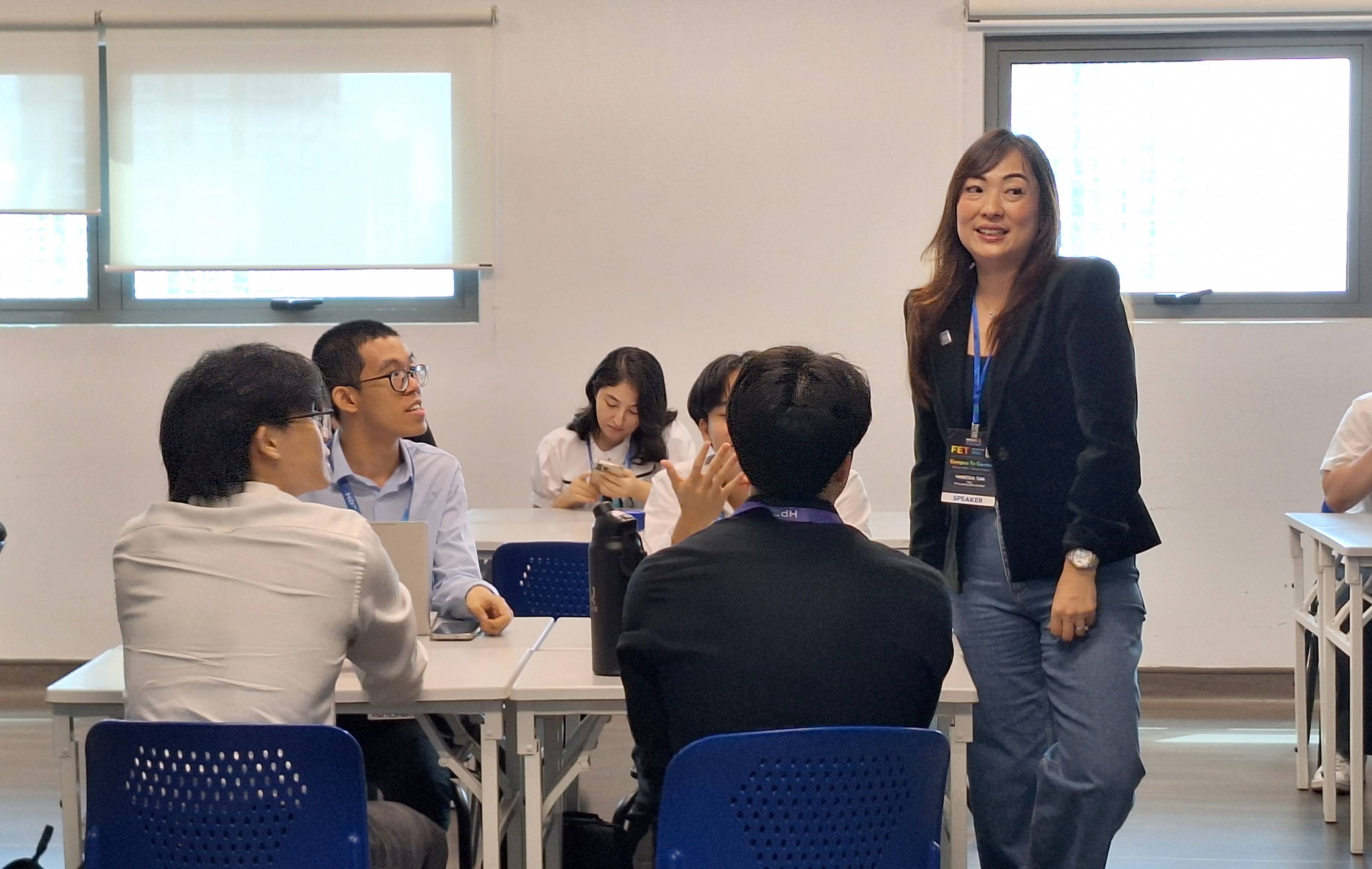
During Universiti Malaya’s Physics Open Week in November last year, HTC’s AI Team Lead Mohd Amir Fawwaz — a physics graduate himself — spoke to first and second year physics students about the changing landscape of professional careers, and what a move from physics into deep learning engineering can look like.
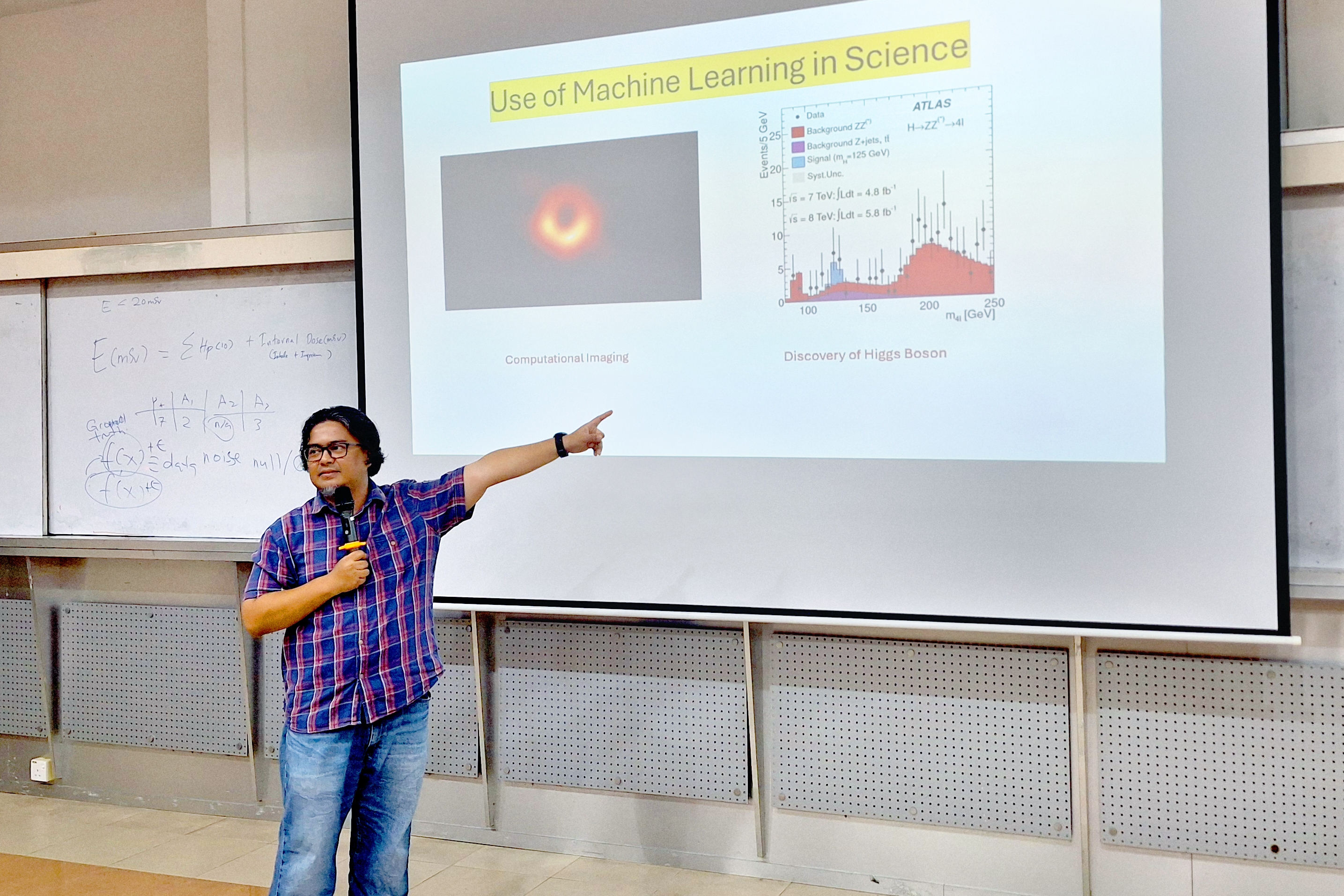
On 15 April 2026, he was back at Dewan Kuliah Fizik at Universiti Malaya — one of the most prestigious public research universities in Malaysia — to do something simple but rare: tell a room full of science students the truth about what a career in AI actually looks like. His featured session was entitled “Object Detection in Image with Deep Learning”.
The Path from Physics to AI
What made Fawwaz compelling to this audience was not just his technical depth but where it came from. He is a Universiti Malaya alumnus himself, and he started where many of the students in front of him are now: a physics undergraduate in the same institution, drawn to the abstract edges of the discipline, completing a Final Year Project in theoretical particle physics, and going on to join what was then the newly formed Particle Physics Group — today known as the National Centre for Particle Physics (NCPP) — after graduation.
The path from there to AI engineering at HTC was not a departure from physics. It was a continuation of it.
"For a physics student, I think venturing to AI is natural. We have the analytical skill. The scientific mind, the inquiry aspects — you already have that. The mathematics you already know."
That reframing was one of the most important things said in that room: not that ‘physics students must learn AI’, but ‘physics students are already built for AI’. The mathematics underpinning deep learning, Fawwaz explained, is at its core a matter of large-scale matrix multiplication. Students who had worked through courses like Quantum Mechanics and Fourier analysis were already operating at a higher level of mathematical complexity than the field of AI typically requires.
The Reality of an AI Career
Fawwaz did not come to sell a glamorous version of the industry. He came with a clear-eyed picture of what the work actually involves. The room responded to that honesty.
The popular imagination of an AI career tends to centre on the model: the neural network, the algorithm, the moment a machine correctly identifies an object in an image or understands a sentence. What Fawwaz described is that the model is, in practice, only a small fraction of the job.
"Creating a model is just one third, or a small portion, of the whole thing. From nine to lunch hour, you'll be spending more time on cleaning your data."
Data cleaning — filtering out noise, handling missing values, correcting imbalanced datasets — is where the real work of an AI professional lives. And beyond that, Fawwaz was clear about what the most important milestone in any AI project actually is: not building the model, but deploying it. Getting it into production requires server configuration, service infrastructure, and continuous performance monitoring. It is work that goes well beyond writing Python code.
For students who had arrived with inflated expectations, this was a useful recalibration. For those quietly uncertain about whether they could enter the field, it was reassuring. The barriers were real, but learnable.
The questions that revealed the real excitement

The Q&A session was where the afternoon came fully alive. The range of questions reflected both the unusual mix of students in the room and how seriously they were taking the opportunity.
One lecturer asked whether historical radiation data could be used to train an AI model to map radiation levels — essentially, an AI application for radiology research. Fawwaz recognised it immediately as a viable Final Year Project.
Another student asked about the limits of AI in detecting very small or very distant objects, with real implications for satellite imaging and precision agriculture.
Others probed the job market realities of competing with engineering graduates, and pressed Fawwaz on why he had chosen to pursue particle physics — a niche path in Malaysia — in the first place.
What the questions shared was a quality of genuine engagement. These were not passive listeners trying to fill a credit requirement. They were students already mapping their futures onto a field moving faster than any curriculum can follow, trying to understand honestly where they might fit.
Taking the first step
For students ready to begin, Fawwaz left a practical starting point: build a GitHub or GitLab portfolio, start learning Python and Linux, explore hands-on libraries like Ultralytics for object detection projects, and, perhaps most importantly, do not wait for the formal curriculum to catch up. The field is evolving in real time, and the resources are there for those willing to be proactive.
The physics background, he reminded them, is an asset that many in the AI industry simply do not have: analytical rigour, comfort with abstraction, and the habit of asking ‘why’ before accepting a result. These are qualities worth carrying forward, and worth saying out loud in a job interview.
Why this matters to us
At HTC, we have long believed that supporting Malaysia’s technology future means showing up in classrooms, on campuses, and in honest conversation with the next generation of talent before they graduate. Not as recruiters, but as practitioners who remember what it felt like to be in that room.
Fawwaz’s visit to Universiti Malaya is one expression of that commitment. The students who filled that hall are the same ones who will shape Malaysia’s AI capabilities over the next decade, across technology companies, healthcare, agriculture, and public research. All of them deserved a straight answer about what the journey ahead looks like.
We were glad Fawwaz could give them one.
Are you a student or fresh graduate interested in building a career in AI? Explore opportunities with our team at htconsulting.com/careers!